
The first question I ask every business owner who comes to me about a website is: "What do you want this site to do for you?"
Nine times out of ten, they've never heard that question before. They haven't really thought about it. They built a website because that's what you do when you have a business. And that's exactly where things go sideways, because a website without a purpose is just an expense, not an asset.
There are over 30 web designers and agencies serving the Rocklin area right now. Some charge $500. Some bill $10,000+. The price difference alone doesn't tell you much. What separates a website that generates leads from one that sits there collecting dust is the strategy behind it. This guide will help you figure out what to look for, what to ask, and what to avoid.
Your Website Should Be Your Hardest Working Employee
We always tell our clients: your website should be your hardest working employee. It should show up every day, bring in leads, and never call in sick. If your site isn't doing that, it's a brochure, and brochures don't pay for themselves.
The biggest mistake we see Rocklin business owners make is treating their website as a checkbox. Got a business? Need a website. Done. But when you flip that thinking (what can I have this website do for me?), everything changes. You start thinking about calls, form submissions, booked jobs. You start thinking about return on investment instead of just having something online.
A website for a local business needs to do three things: show up when customers search for your services, convince them to contact you, and track every lead so you know what's working. That means your web designer needs to understand search engine optimization, conversion design, and analytics, not just colors and fonts.
When I look at a prospect's website for the first time, I'm checking two things. First, the look and feel: is it modern? Then, is it designed to convert? That means proper calls-to-action, clickable phone numbers, a hero section that isn't wasted (since the majority of visitors never scroll past it), and 100% clarity on what the business does so visitors don't have to guess. If a designer isn't thinking about conversion from the start, you'll end up with something that looks nice but doesn't generate business.
7 Questions to Ask Before You Hire a Web Designer
These aren't trick questions. They're the bare minimum for figuring out whether someone can build a site that actually performs for a local business.
1. "Can you show me sites you've built that rank on Google?"
If I could give you only one question to ask, this is the one. Not sites that look good. Sites that rank. Ask them to pull up the search results right there in the meeting. If they can show you client websites appearing on page one for real local searches, they know what they're doing. If they can only show you screenshots of pretty designs, that tells you everything you need to know.
2. "How many pages will my site have and why?"
Google expects to see certain core pages: Home, About, Contact, Privacy Policy, Terms of Service. That's the foundation. But beyond that, your site needs a service hub page and then dedicated service-plus-location pages for SEO. A Rocklin landscaper who does hardscaping, irrigation, and landscape design needs separate pages for each, because that's how people search. If a designer tells you five pages is enough, they're building a template, not a strategy.
3. "What's your approach to local SEO?"
If they mention title tags and meta descriptions and stop there, that's not local SEO. Real local SEO includes location-specific content, Google Business Profile optimization, schema markup for local business structured data, internal linking strategy, and content that targets the actual searches happening in Rocklin, Roseville, Lincoln, and surrounding areas.
4. "How will I know if my site is working?"
If it's not being measured, it's not being managed. A good answer includes Google Analytics 4, Google Search Console, call tracking, and form tracking, at minimum. You should be able to see exactly how many people found your site, which pages they visited, and how many turned into leads. If the designer doesn't set up tracking from day one, you'll never know if your investment is paying off.
5. "Will I own my website and domain?"
Some designers build your site on their hosting under their account. If you stop paying them, your site disappears. Make sure you own the domain registration, you have admin access to the hosting, and you can take the site files with you if you leave. This is non-negotiable.
6. "What platform are you building on and why?"
This tells you a lot about a designer's approach. WordPress, Squarespace, Wix, custom-built. Each has trade-offs. What matters is whether they can explain why a specific platform is the right choice for your business, not just the one they're comfortable with. A designer who builds everything on the same platform regardless of the client isn't thinking about your needs.
7. "What happens after the site launches?"
A website isn't a one-time project. It needs content updates, security patches, performance monitoring, and ongoing SEO work. If the designer's plan is to hand you the keys and disappear, you're going to be stuck with a site that slowly degrades. Ask about maintenance plans, content updates, and ongoing optimization.
The Most Expensive Mistake Rocklin Business Owners Make
Having a website created without thinking about SEO first. It happens all the time. You pay for a website that looks decent, but it's not designed to rank on Google. So you either leave it sitting there getting no visitors, or you pay an SEO to come back and fix it. That's like buying two websites.
Here's what makes this tricky: the redesign doesn't feel like a failure. You get a beautiful new site and you're happy with it, because that's what you asked for. What you don't realize is that you may never make that money back because the site isn't designed to convert visitors into customers. It's not that the designer did a bad job. It's that the site was built to look good instead of built to perform.
The fix is simple: SEO and conversion strategy come first, design comes second. Content before code. Structure before style.
Real Example: Stuteville Landscaping
Luxury landscape construction in Sacramento. Same business, same services. The difference is the website strategy behind it.
Before
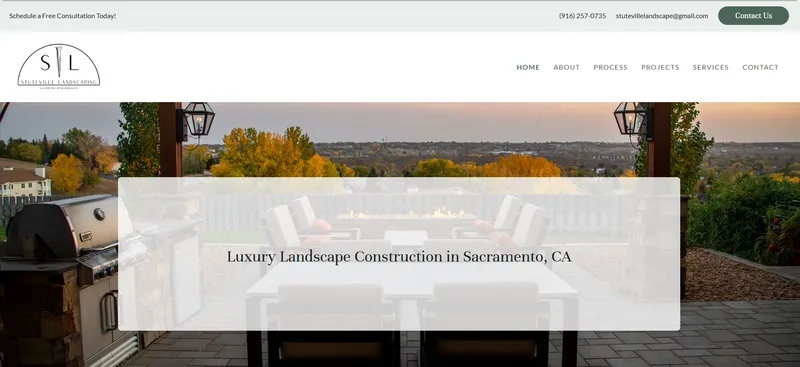
Washed-out overlay hiding the hero image. Small heading. No clear call-to-action above the fold.
After
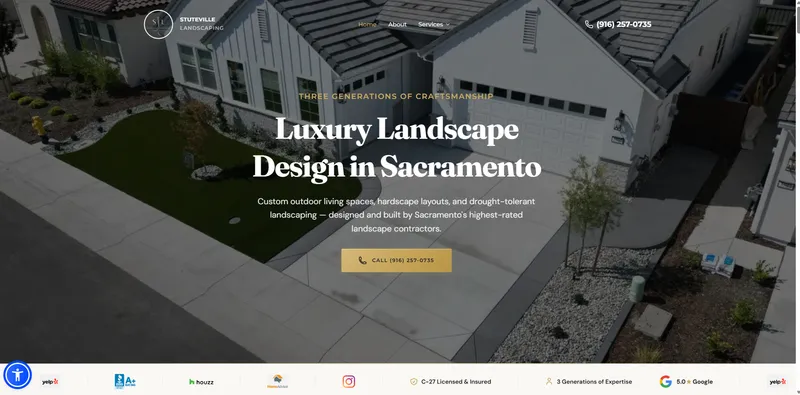
Bold headline, prominent phone number, clear CTA, and a trust strip showing 5.0 Google rating, C-27 license, and 3 generations of expertise.
After the rebuild, mobile page speed went from 68 to 94. Google Search Console showed page 1 rankings for retaining wall and paver keywords before we even built dedicated pages for those services.
Real Example: DKH Plumbing
Residential and commercial plumber serving Rocklin, Grass Valley, and surrounding areas. Went from a single-page WordPress site to a 20-page custom build.
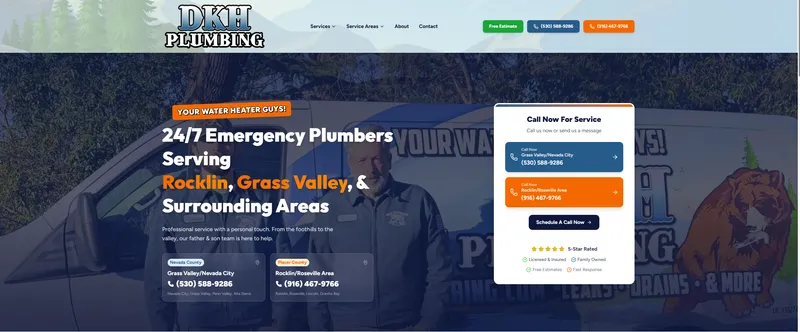
Clear service areas, dual phone numbers for two regions, prominent CTAs, trust badges, and a hero that communicates exactly what they do in under two seconds.
DKH Plumbing had zero organic keyword rankings before the rebuild. In under one month with the new site: 15,100 impressions and 56 organic clicks. That is what happens when you build a site with SEO strategy from day one instead of bolting it on after.
Red Flags to Watch For
After working with Rocklin businesses who came to us after spending money on sites that weren't delivering, these are the patterns we see over and over.
- × They can't show you results, only designs. Screenshots of pretty websites aren't proof of anything. Ask for traffic numbers, search rankings, or lead counts. If they don't track those things for their own clients, they won't track them for you.
- × They quote you before asking about your business. If someone gives you a price before understanding what you do, who your customers are, and what your competitors look like, they're selling a template, not a strategy.
- × They lead with branding and aesthetics. Designers who want to nail your logo and color palette before discussing strategy are talented at what they do: design. But a website needs to convert and rank, not just look good. Design and SEO are different skill sets, and you need both.
- × They don't mention page speed or Core Web Vitals. Google uses page speed as a ranking factor. If the designer isn't talking about load times, image optimization, and performance scores, your site will be slow -- and slow sites lose both rankings and customers.
Page Speed Matters More Than You Think
This is a real before/after from a client site. Same website, same content. The only difference is how it was built and optimized.
Before
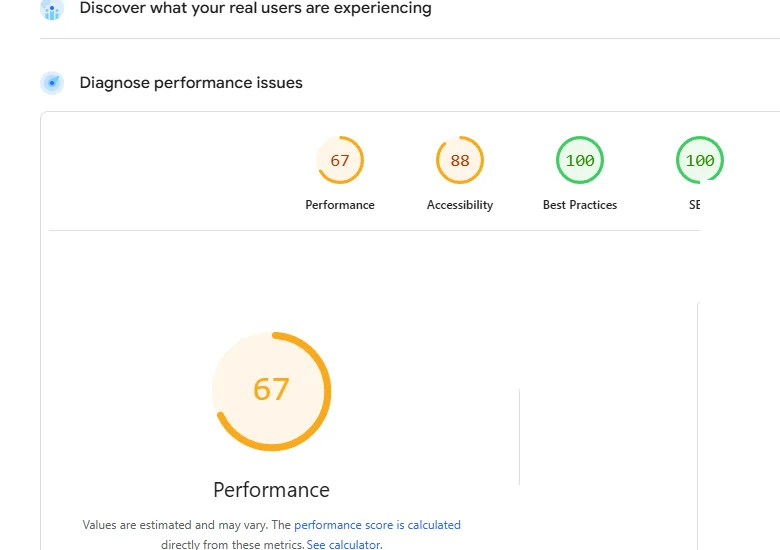
Performance: 67. Google considers anything below 90 a problem.
After
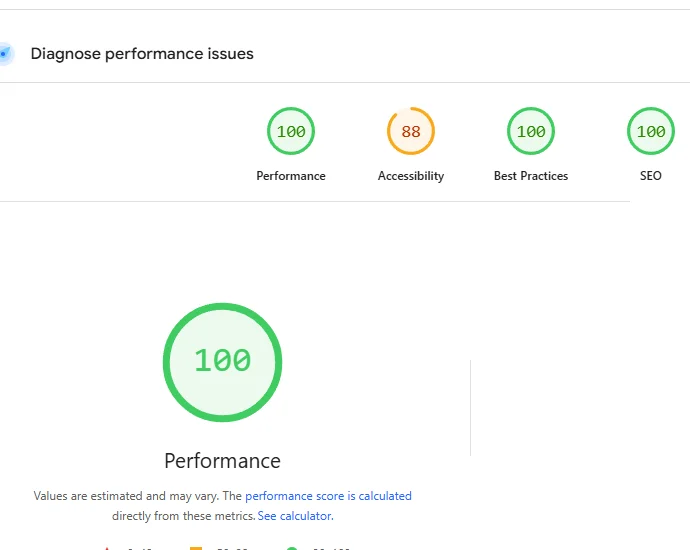
Performance: 100. SEO: 100. Best Practices: 100. This is what a properly built site scores.
- × The contract locks you in but doesn't guarantee deliverables. Watch out for long-term contracts with vague scope. You should know exactly what you're getting: how many pages, what's included in SEO, what the timeline is, and what happens if they don't deliver.
What Separates a $1,500 Website from a $5,000 Website
For $1,500, you're going to get a template site that looks like everyone else's. It won't be optimized for SEO, and it will function as a good-looking business card online. There's nothing wrong with that if it's all you need right now.
When you spend more, you get more input, more customization, and an SEO-optimized site right out of the box, including content and site architecture designed to help you get seen on Google. A custom site for a Rocklin HVAC company looks completely different from one built for a Rocklin law firm, because the searches are different, the user intent is different, and the conversion path is different. That attention to detail is what you're paying for.
And here's an honest take on DIY: if you want to build your own site and don't have the resources for a custom build, Wix and Squarespace are perfectly fine options. The learning curve isn't that steep and the sites can look good. Where they fall short is competing in local search against properly built custom sites, but as a starting point, they work. We wrote more about the trade-offs in Why We Don't Use Squarespace or Wix.
If someone is charging you custom prices but delivering what's essentially a template with your logo swapped in, you're overpaying. Ask to see the site map before they start building. If it looks the same as every other site they've done, it's a template.
How We Approach It at PipelineOS
Our process starts with a conversation, not a design tool. After our first call, I ask clients to send me websites that inspire them, sites they like the look and feel of. That gives me a direction to start. From there, I create a mockup they can react to: what they like, what they don't. But here's the important part: I work on the content before any pages are created. Once the core page content is written and optimized, then I start building the site. Content drives design, not the other way around.
One thing I always look for is ways to add tools, calculators, or something interactive that keeps people engaged on the site. Google pays attention to how long visitors stay, and interactive features differentiate you from every competitor who has the same static five-page layout. A cost estimator, a service quiz, a booking widget. If you can dream it up, we can likely get it on your website. These aren't gimmicks. They generate leads and keep visitors on your site longer, which helps you rank higher.
Our sites are built on modern, fast frameworks, not bloated WordPress themes with 40 plugins. Every site we deliver scores 95-100 on Google PageSpeed and passes Core Web Vitals. These are the performance metrics Google uses to rank your site, and they matter more than most business owners, and most web designers, realize. If your designer hasn't mentioned PageSpeed or Core Web Vitals, they probably don't know they exist. On top of that: full schema markup, dedicated service and location pages, internal linking architecture designed to build topical authority, GA4, Search Console, and call tracking set up from day one. And you get weekly reports showing exactly what's happening: traffic, rankings, leads, and revenue.
One of our clients, a pest control company, came to us after their previous designer-built site wasn't generating leads. We rebuilt it with 89 pages of optimized content. Their average search position went from 37 to 15. Over 100 form submissions and an estimated $18,000 in revenue from organic search in 12 months.
That's the difference between a website that looks good and a website that works. See more results on our case studies page, or learn about our Website Revenue System.
Frequently Asked Questions
How much does a web designer cost in Rocklin, CA?
In the Rocklin and Sacramento area, web design typically ranges from $2,500 to $10,000+ for a small business site. For around $1,500 you'll get a template-based site that looks like everyone else's. That's a decent online business card, but not optimized for search. When you invest more, you get more input, more customization, and a site that's SEO-optimized out of the box with proper content and architecture. The real question isn't how much it costs. It's how much it makes you.
Should I hire a local web designer or a remote one?
For local businesses that depend on local customers, a designer who understands your market is more valuable than one who just builds pretty pages. Someone who knows Rocklin, Roseville, and the surrounding Placer County market will build a site that targets the right searches, references the right neighborhoods, and speaks to the right audience. A remote designer can do good work, but they won't know that people in Rocklin search differently than people in San Francisco.
Do I need a web designer or can I use Wix or Squarespace?
Honestly, if you want to build your own site and don't have the resources for a custom build, Wix and Squarespace are perfectly fine. The learning curve isn't that steep and the sites can look good. Where they fall short is competing in local search. Slower page speeds, limited schema markup, restricted site architecture, and bloated code make it harder to rank against properly built custom sites. If your competitors already have strong websites with solid SEO, a DIY builder may not keep up. We wrote more about the trade-offs in Why We Don't Use Squarespace or Wix.
What's the difference between a web designer and a web developer?
A web designer focuses on visual layout, colors, typography, and user experience. A web developer handles the code, functionality, and technical implementation. For a local business, what you actually need is someone who combines both with SEO and lead generation strategy. Otherwise you get a site that looks good but doesn't generate business. We cover this distinction in Why an SEO Should Design Your Website.
Related Reading
Want to see how your current site stacks up, and what it's costing you in missed leads?
Find Out Why Your Website Isn't RankingOr call us: (916) 232-9891

Written by
Wesley CableFounder & Lead Strategist, PipelineOS
Helping local businesses in the Sacramento region turn their online presence into measurable revenue. Specializing in local SEO, AI search optimization, and lead pipeline systems built on real data.
Connect on LinkedIn